How do you light a wood-burning stove correctly?
3 min read
A wood fire should get going promptly and burn with clear flames. You need dry logs, fine kindling and enough air. Here are the main steps. Use your stove’s manual for the specified fuel load and air-control settings.
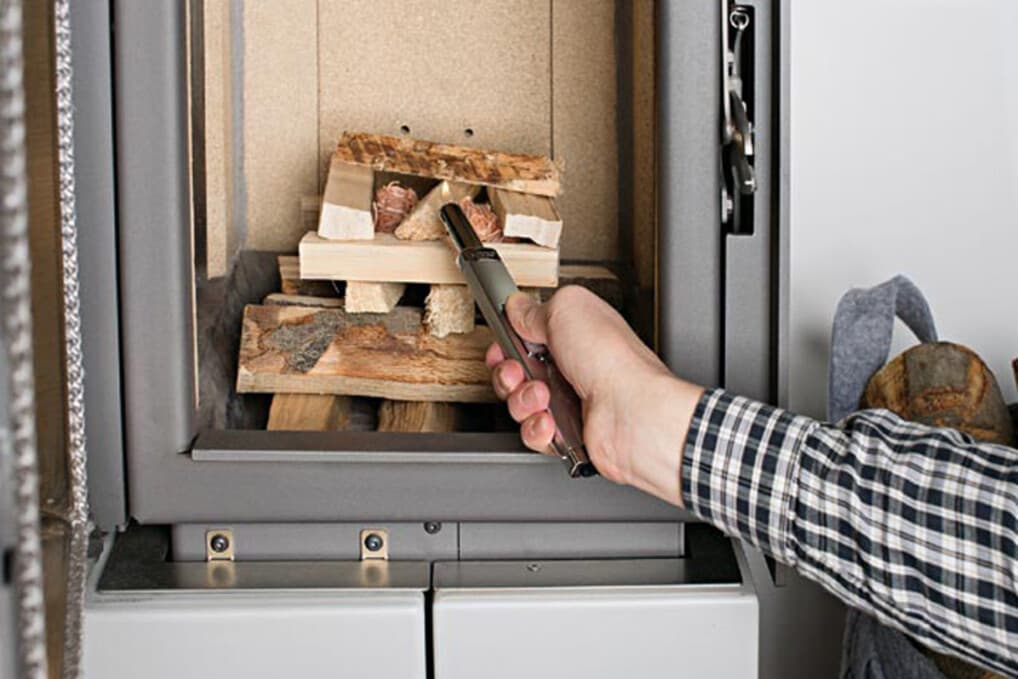
1. Get everything ready
Use dry, untreated logs and solid stove firelighters, such as wax-coated wood wool. Paper, cardboard and treated timber do not belong in the fire. Never use methylated spirits, petrol or other liquid accelerants.
Air openings must be clear. Remove excess ash as directed by the manual. Some stoves need a thin ash bed left in the firebox. Do not exceed the specified fuel load.
2. Light from the top where appropriate
Top-down lighting works well in many wood stoves: the flames work down through the stack. This can reduce emissions during startup. A grate in the firebox floor does not automatically mean that you should light from underneath.
The right method depends on how air reaches the fire in your stove. If the manual specifies a different method, follow it. During the handover, we show you how to stack the logs and set the air controls.
3. Build the stack
For top-down lighting, work in this order:
- Place the permitted load of logs at the bottom, leaving small gaps for air.
- Lay fine kindling across them and put the solid firelighters among the kindling at the top.
- Open the air controls to the lighting position, light the firelighters and close the firebox door as instructed.
4. Let the fire burn properly
The fire needs plenty of air to start. Once the logs are burning well, move the controls to the prescribed operating setting. With separate controls, air from below is often reduced while the flames still need their air supply.
Do not choke the fire to make it last longer. A smouldering fire burns poorly. If the glass quickly blackens or dark smoke keeps appearing, have the fuel, air supply and chimney draught checked.
5. Reload, then let it burn out
Logs are usually added to a hot bed of embers once the yellow flames have died down. Open the door slowly and place the permitted load inside gently. If necessary, use the lighting setting again until the new logs catch.
To finish, simply stop adding fuel. Once only embers remain and no flames are visible, you can close the combustion air control. Let ash cool in a suitable metal container with a lid, on a non-combustible surface. It can hold embers for longer than it appears to.