Which stove is the most efficient?
2 min read
Keeping as much useful warmth as possible from your logs is the aim. A masonry stove can store it for hours. A boiler stove can share it with other rooms through the heating system. The best choice depends on where and when you need that heat.
What the efficiency rating tells you
The rating describes how much of the fuel’s energy becomes useful heat under test conditions. A good figure matters. Your actual wood consumption also depends on whether the stove suits the house and how it is used.
A powerful stove that overheats a small room is little help. If excess warmth escapes through an open window, the good test figure achieves very little. We choose the output around the heat your home actually needs.
Stored warmth for later in the day
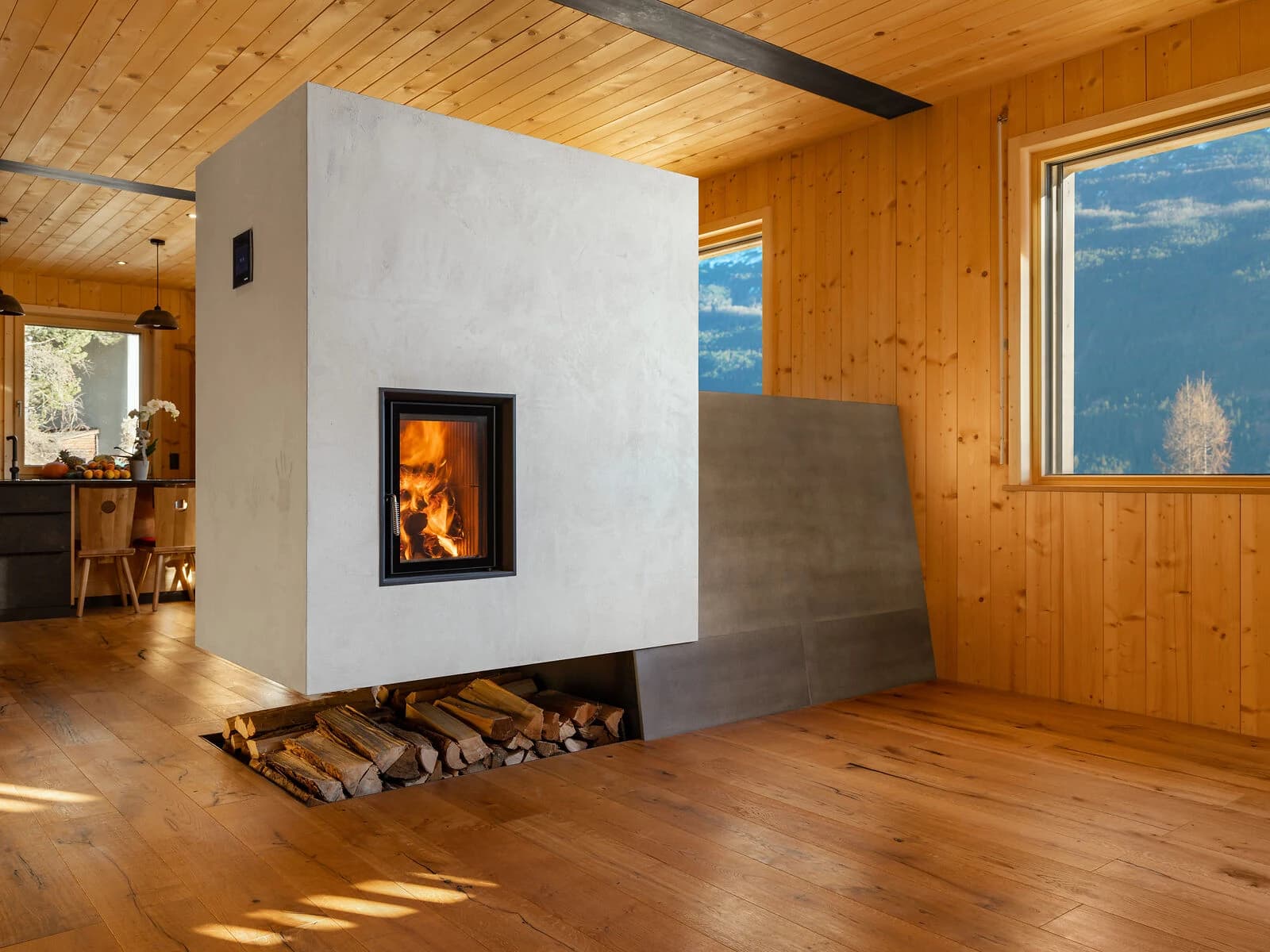
A masonry stove absorbs heat into its ceramic mass during the burn, then gradually releases it through its surface. This suits a room where you want steady warmth over a longer period.
The stored heat remains available after the fire has finished. That works well if you light the stove in the morning and use the room throughout the day. For a short evening fire, a quicker-responding appliance may be more practical.
Sharing heat with the central heating
A boiler stove transfers part of its heat to heating water. A buffer tank, essentially a large insulated store of hot heating water, keeps it available for later. Other rooms can then benefit through the heating system.
We plan this around the existing heating. Tank size, controls and demand need to match. The heat that still goes directly into the room containing the stove must be suitable too.
The part you can influence
Dry, suitable logs, the correct fuel load and enough combustion air make a real difference in everyday use. Follow the instructions for your installation and have the stove and flue passages cleaned regularly. That gives the equipment the conditions it needs to work well in your home.