Which stove retains heat the longest?
2 min read
If you want to light a fire in the morning and still feel warmth from the stove in the afternoon, consider a masonry or heat-storage stove. It absorbs heat during the burn and releases it over several hours. Its internal construction is what makes that possible.
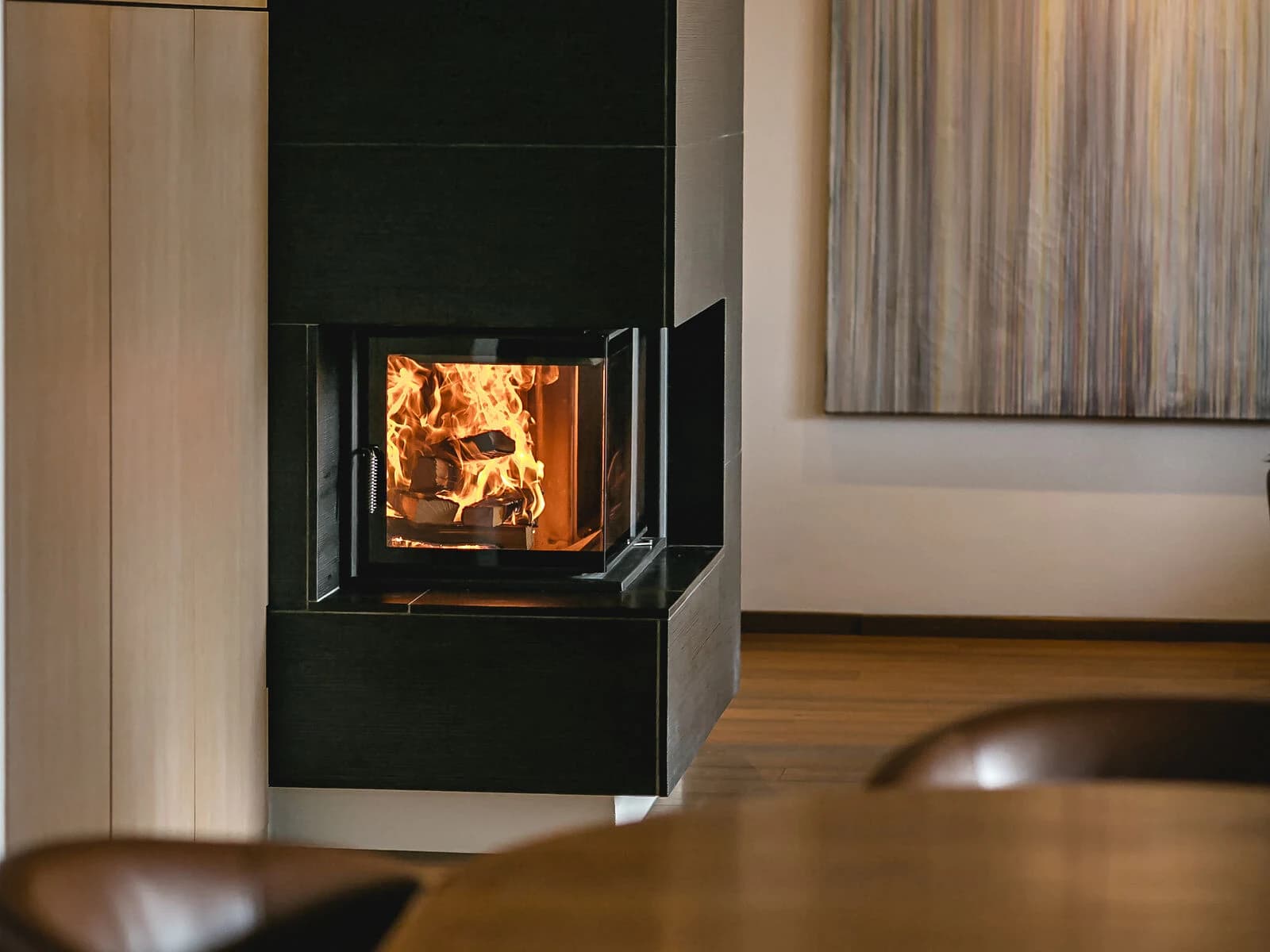
The stone stores the heat
A masonry stove has a firebox and heat-storing channels made from ceramic material. Hot combustion gases pass through the channels and warm the storage mass. Once the fire has finished, the outer surface gradually releases that heat into the room.
You feel this radiant warmth directly on your skin, rather like warmth from the sun. The fire does not need to keep burning. Heavy cladding alone, however, does not turn an ordinary stove into a masonry heater. Firebox, storage mass and surface need to work together.
How long will it stay warm?
Stoves designed for heat storage can release warmth for ten to twelve hours. Some installations are designed for longer periods, up to 24 hours. How useful that warmth is in your living room also depends on insulation and the amount of heat the room needs.
A stove wall that still feels warm may not provide enough heat on a cold winter day. That is why we look at heat output across the day when planning, as well as when you actually need it.
Choose around your daily routine
A large heat store takes time to warm up. You may feel warmth through the glass while the fire burns, but the masonry responds more slowly. If you arrive home late and only want a short fire, a quicker-responding stove may suit you better.
For regular heating over several hours, a storage stove is a useful option. Tell us when you are normally at home. We can use that to work out a suitable storage capacity and heat output.